
Asparagus pesto

Nothing indicates the onset of spring like fresh asparagus becoming more prevalent in the local grocery produce.  I look for stalks with smaller diameters as they are likely “younger”, which indicates a tender texture.  Larger stalks tend to be “woody”.  The feathery tip is another quality indicator.  Asparagus that has been harvested at precisely the right time and has not been on a grocery shelf too long has a “tightly packed” feathery tip.  Suboptimal asparagus has a tip that has started to “fern out”.

So I was thinking of pesto – I had really good pine nuts and a high- quality olive oil; however, I did not have fresh basil – it’s too early for fresh basil.  So, I improvised creating an asparagus pesto.  Fabulous!

I puréed 1 pound of quality asparagus adding 1/4 cup of pine nuts, 3 garlic cloves and a drizzle of olive oil.  I added enough olive oil to achieve a somewhat “fluffy” texture.  Salt and pepper to taste finished the pesto.  I tossed penne pasta in the asparagus pesto and garnished the pasta with goat cheese.  Asparagus pesto – I just might be on to something!
brussel sprouts

As Doris recently stated, “Brussel sprouts are the new kale”.  Despite my countercultural tendencies, I, like apparently many, fully embrace these little green cabbages!

About a month ago, I discovered shredded brussel sprouts in a fabulous salad at Destihl, a  local microbrewpub.  The salad, which was garnished with dried cherries, red onions and candied bacon (yes, candied bacon…close your eyes and ponder that for a moment..), opened my mind to creative ways to leverage this winter vegetable.

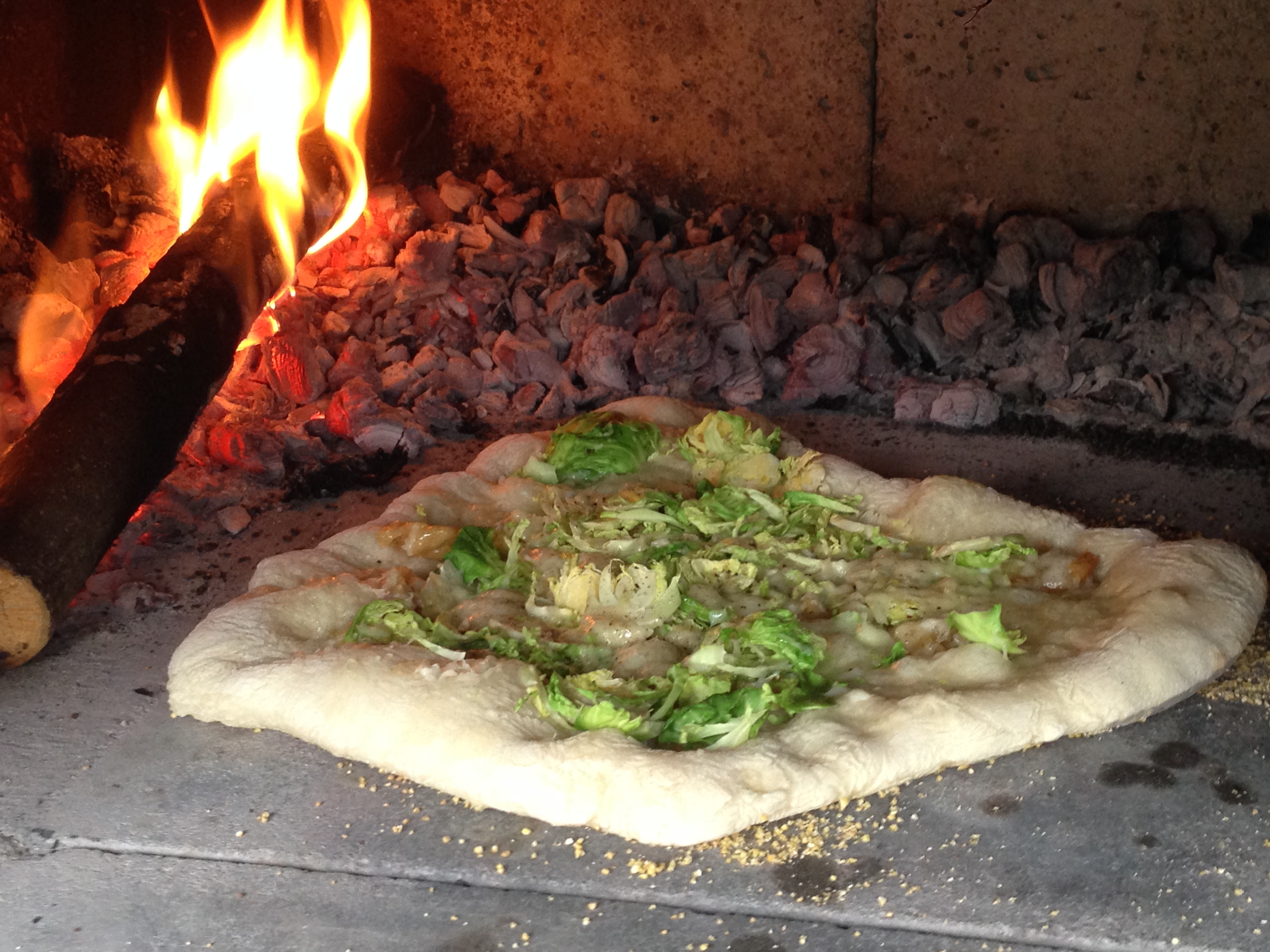
This past weekend wasimage an opportunity to experiment with two culinary delights: pizza and of course, brussel sprouts.  The outcome?  Shredded brussel sprout, roasted garlic pizza with Gruyere cheese.  The nuttiness of roasted garlic combined with the Guryere nicely balanced the bite of the brussels.

When shopping for brussels, examine where the stalk was cut – it should be white.  Brussels that haven’t been recently harvested will be brown where the stalk was cut.  While “old” brussels are totally edible, they have a strong, more bitter taste; however, depending on the preparation, those overpowering flavors will mellow – especially when the brussels are roasted!

smokey cocoa & chili-rubbed pork chops

Thick-cut pork chops are perfection on a grill because striking grill marks are possible without yielding a dry, tough hunk of meat.  A quick brining maximizes the juiciness and produces an extremely tender pork chop.  Then, drawing from my southwestern roots, I combined cayenne pepper and cocoa powder for a rich rub with a bit of a kick.  A quick sear on the grill for artful grill marks with a finish in the smoker results in a delightfully smokey, rich pork chop.

First, the pork chops.  Use thick-cut pork chops (~3″) trimming any fat from the edges.

Next the brine.  Dissolve 2 teaspoons of salt in 2 quarts of water and add 2 tablespoons of red chili flakes.  Brine the pork chops at room temperature for about an hour.

Now for the rub – it’s an easy formula. 1 tablespoon of each:  cocoa powder, dark brown sugar, and cayenne powder.  After removing the chops from the brine, dry them and brush them with a spot of olive oil.  The oil holds the rub on the chops.  Next, dredge the chops in the rub covering all sides.

Place the chops on a blazing hot grill.  I typically wipe the grill grates with grapeseed oil just prior to grilling.  After about 2 minutes, turn the chops a quarter turn – think 10:00 and 2:00.  This produces striking diamond grill marks.  After 2 more minutes, flip the chops repeating the quarter turn after 2 additional minutes.

At this point, the exterior of the chops is cooked sealing in all of the juices.  I finish cooking to an internal temp of 145F in a 225F smoker.  I like the bold flavor of oak with the cocoa, so I use white oak for smoking.  It doesn’t take long for the pork chops to finish cooking – do not over cook!